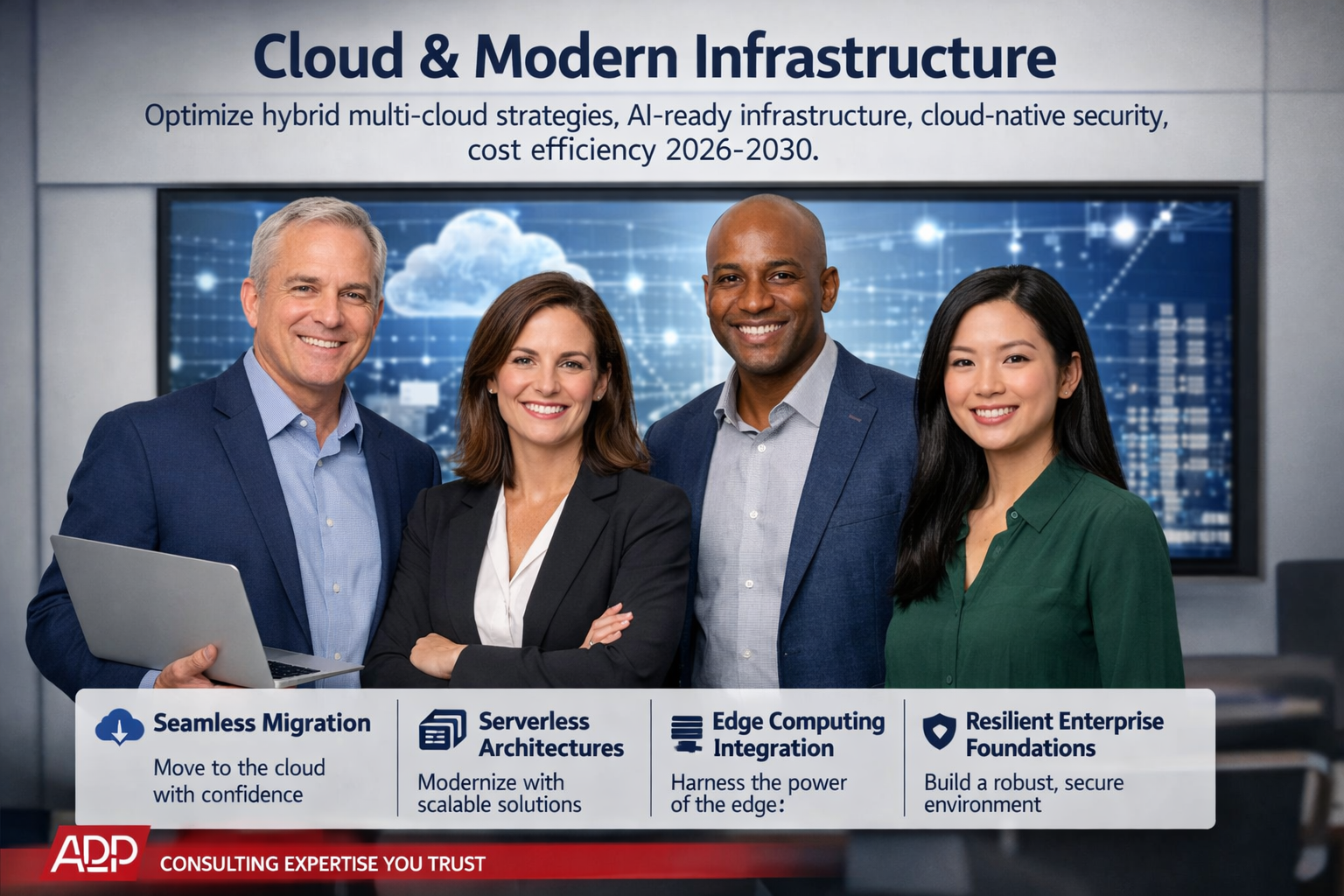
The way businesses manage their IT resources is evolving rapidly. Cloud & infrastructure are at the heart of this transformation, enabling businesses to operate with greater agility, scalability, and cost efficiency. As organizations move away from traditional on premises infrastructure, they are embracing cloud computing solutions to streamline operations and reduce costs while maintaining security and flexibility.
But what exactly are cloud and infrastructure, and why are they crucial for modern businesses? In this blog post, we’ll define these key concepts, explore their importance, and address some common misconceptions and challenges businesses face when adopting cloud based solutions.
What Are Cloud & Infrastructure?
Cloud Computing
Cloud computing refers to the delivery of computing services, such as storage, processing power, and networking, over the internet, or “the cloud.” Instead of maintaining physical servers or data centers, businesses can access computing resources on demand from cloud service providers like Amazon Web Services (AWS), Microsoft Azure, or Google Cloud Platform (GCP).
There are three main types of cloud services:
Infrastructure as a Service (IaaS): Provides virtualized computing resources over the internet, including servers, storage, and networking.
Platform as a Service (PaaS): Offers a platform that allows businesses to build, deploy, and manage applications without worrying about infrastructure management.
Software as a Service (SaaS): Provides access to software applications hosted on the cloud, eliminating the need for businesses to install and maintain software on their devices.
Infrastructure
Infrastructure refers to the foundational components needed to support IT systems, such as servers, storage devices, networks, and databases. Traditional infrastructure required businesses to maintain on premises servers, which could be costly and difficult to scale. With cloud based infrastructure, businesses can access these resources on demand, improving scalability and flexibility.
Why Is Cloud & Infrastructure Important?
Scalability
One of the main advantages of cloud computing is scalability. With cloud services, businesses can quickly scale their infrastructure up or down based on demand. This is particularly valuable for businesses that experience fluctuating workloads, as they only pay for the resources they use.
- Stat: According to Gartner, 70% of enterprises are expected to adopt a cloud first strategy by 2025, driven by the need for more flexible and scalable IT infrastructure.
Cost Efficiency
Cloud infrastructure allows businesses to eliminate the costs associated with maintaining physical servers and data centers. With pay as you go models, companies can significantly reduce capital expenditures and shift to operational expenses, making it easier to budget for IT resources.
- Example: Instead of investing in a large data center, businesses can leverage cloud services to store data, run applications, and access computing power on demand, lowering the total cost of ownership.
Security and Compliance
Cloud service providers invest heavily in security, offering robust encryption, authentication, and compliance certifications. This helps businesses ensure that their data is protected from breaches and meets regulatory requirements. Cloud services also provide automatic updates and patches, reducing the burden of manual security maintenance.
- Example: Many cloud providers, such as AWS and Azure, offer industry standard certifications like ISO 27001 and GDPR compliance, ensuring that businesses meet the highest security and compliance standards.
Business Continuity and Disaster Recovery
Cloud based infrastructure enhances business continuity by providing backup and disaster recovery solutions. If an on premises system fails, businesses can quickly recover their data and continue operations from the cloud, minimizing downtime.
- Example: Using cloud based backup solutions, businesses can restore critical data and systems in the event of a disaster, ensuring that their operations remain uninterrupted.
Common Misconceptions and Challenges in Cloud Adoption
Misconception 1: Cloud is Only for Large Enterprises
Many small and medium sized enterprises (SMEs) believe that cloud computing is only for large organizations with significant IT budgets. However, cloud services are designed to be scalable and affordable for businesses of all sizes. SMEs can benefit from the flexibility, cost efficiency, and security of the cloud without the need for large upfront investments.
- Solution: Cloud providers offer various pricing models, making it easier for businesses of any size to start with cloud computing and scale as needed.
Misconception 2: The Cloud is Not Secure
Another common misconception is that cloud computing is inherently insecure. While security concerns are valid, cloud providers have invested heavily in advanced security measures to protect data. In fact, cloud services often offer better security than on premises infrastructure, thanks to robust encryption, multi factor authentication, and regular security audits.
- Solution: Businesses should choose reputable cloud providers with strong security practices, and also implement additional security measures like firewalls and access controls.
Challenge: Data Migration and Integration
Migrating data from on premises systems to the cloud can be complex, especially for businesses with large volumes of legacy data. Integration with existing IT systems and applications can also pose challenges, particularly if there is a need to maintain hybrid environments (a mix of on premises and cloud infrastructure).
- Solution: To address these challenges, businesses should work with cloud migration specialists to plan a smooth transition. Cloud providers also offer tools and services to facilitate data migration and integration.
Real World Applications of Cloud & Infrastructure
E Commerce and Retail
Cloud based infrastructure is essential for e commerce platforms that require scalable resources to handle fluctuating traffic, especially during peak shopping seasons. Retailers can also leverage the cloud to analyze customer data and personalize shopping experiences.
- Example: Amazon uses its own cloud platform, AWS, to power its e commerce platform and offer services like data storage, analytics, and machine learning.
Healthcare
The healthcare industry relies on cloud based infrastructure to store and manage large volumes of sensitive patient data, comply with regulations, and provide secure access to medical records across multiple locations.
- Example: Healthcare providers like Mayo Clinic use cloud services to store electronic health records (EHRs) and run analytics on patient data, improving treatment outcomes and operational efficiency.
Financial Services
Financial institutions use cloud based infrastructure to securely process transactions, store customer data, and support real time analytics for risk management and fraud detection. The cloud also provides a flexible environment for deploying new financial products.
- Example: Banks like Capital One use cloud services to enhance customer experiences, run analytics on financial data, and improve security measures.
How to Adopt Cloud & Infrastructure for Your Business
Assess Your Needs
Before migrating to the cloud, assess your business’s specific needs and goals. Determine which applications, services, and workloads can benefit from cloud adoption. Consider factors like scalability, security, and cost.
- Tip: Start with non mission critical workloads to gain experience with cloud migration and gradually move more critical applications as you become comfortable with the technology.
Choose the Right Cloud Provider
Select a cloud provider that aligns with your business’s needs. Consider factors such as service offerings, security features, pricing, and support. The three major cloud providers—AWS, Microsoft Azure, and Google Cloud—offer a wide range of services, but each has its strengths.
- Tip: Compare the features and pricing models of different providers to ensure you choose the best fit for your business.
Develop a Cloud Migration Strategy
Plan your migration carefully to minimize disruption. This includes setting clear goals, establishing timelines, and preparing for any potential challenges. Work with experienced cloud consultants if needed.
- Tip: Consider a hybrid cloud strategy if you need to maintain some on premises systems alongside your cloud infrastructure during the transition.
Conclusion: Embrace the Future with Cloud & Infrastructure
Cloud & infrastructure are transforming the way businesses manage their IT resources, offering scalability, cost efficiency, and improved security. By adopting cloud technologies, businesses can streamline operations, enhance customer experiences, and drive innovation.
Whether you’re a small startup or a large enterprise, cloud computing provides the flexibility and scalability necessary for long term success. Start by assessing your needs, choosing the right provider, and developing a cloud migration strategy to unlock the full potential of cloud & infrastructure.
Are you ready to move to the cloud? Share your thoughts in the comments below or reach out to us on social media to discuss how cloud solutions can benefit your business!