Data, Analytics & Insights: Unlocking the Power of Information for Business Growth
Table of Contents

In today’s data driven world, the ability to harness and analyze data has become a critical success factor for businesses. Data, Analytics & Insights are no longer optional they’re fundamental to making informed decisions, improving operational efficiency, and staying competitive.
But what exactly do these terms mean, and why are they so important for businesses of all sizes?
In this blog post, we will define Data, Analytics & Insights, explain their significance in today’s business landscape, and highlight common misconceptions and challenges. We’ll also delve into practical strategies for leveraging these powerful tools to drive growth and performance in your organization.
What Are Data, Analytics & Insights?
Data
Data refers to raw, unprocessed facts and figures collected from various sources such as transactions, social media, website activity, customer feedback, and more. It can come in many forms, including numbers, text, images, and videos.
For example, customer information such as purchase history or website interactions are types of data that businesses can analyze to gain deeper insights.
Analytics
Analytics is the process of examining data to identify patterns, trends, correlations, and other valuable insights. By applying statistical and computational methods, businesses can make sense of vast amounts of data to inform decision making.
Analytics can be descriptive (looking at past data), predictive (forecasting future trends), or prescriptive (providing recommendations for future actions).
Insights
Insights are the actionable conclusions drawn from data and analytics. They go beyond just numbers they provide a deep understanding of the “why” behind the data and inform strategic decisions. Insights are what businesses use to solve problems, drive innovation, and improve performance.
For example, discovering a drop in sales due to poor customer experience is an insight derived from analyzing customer feedback data.
Why Are Data, Analytics & Insights Important?
Informed Decision Making
Data and analytics empower organizations to make decisions based on facts, not intuition. By analyzing historical and real time data, businesses can reduce uncertainty and make more confident, evidence based decisions.
- Stat: According to a report by McKinsey, data driven companies are 23 times more likely to acquire customers, 6 times more likely to retain customers, and 19 times more likely to be profitable.
Optimizing Operations and Efficiency
By analyzing internal processes and identifying inefficiencies, businesses can streamline operations and reduce costs. Data and analytics can reveal where time and resources are being wasted, allowing for process optimization.
- Example: A logistics company might use data analytics to optimize delivery routes, reducing fuel costs and improving delivery times.
Improving Customer Experience
Data can help businesses understand customer preferences, pain points, and behavior patterns, enabling them to create personalized experiences. By analyzing customer interactions and feedback, businesses can improve product offerings, marketing strategies, and customer service.
- Example: Netflix uses data to recommend personalized shows and movies based on users’ viewing history, enhancing customer satisfaction and retention.
Driving Innovation and Growth
Data driven insights can fuel innovation by revealing market trends, consumer needs, and emerging opportunities. By leveraging analytics, businesses can develop new products, services, and business models that cater to customer demand.
- Example: Apple uses data from its customers to design and refine products, ensuring that they meet consumer needs and preferences, helping the company maintain its competitive edge.
Common Misconceptions and Challenges in Data, Analytics & Insights
Misconception 1: More Data Equals Better Insights
A common misconception is that collecting more data automatically leads to better insights. However, having too much data can be overwhelming and lead to analysis paralysis. What’s more important is the quality of the data, not just the quantity.
- Solution: Focus on collecting relevant, high quality data that aligns with your business goals. Use analytics to prioritize and focus on actionable insights.
Misconception 2: Analytics Is Only for Big Companies
Many small and medium sized enterprises (SMEs) believe that data analytics is only for large corporations with vast resources. However, with the availability of affordable analytics tools and cloud based solutions, SMEs can also leverage data to improve decision making.
- Solution: SMEs should start small with simple analytics tools and scale as their needs grow. Many cloud platforms offer easy to use, cost effective solutions that democratize access to powerful analytics.
Challenge: Data Privacy and Security
As businesses collect more data, they face increased risks related to data privacy and security. Ensuring that sensitive data is protected and complies with regulations (such as GDPR) is a critical challenge.
- Solution: Invest in robust data security measures and stay up to date with privacy regulations to protect customer information and avoid legal penalties.
Challenge: Skill Gaps in Data Analytics
Effective data analytics requires specialized skills, and many businesses struggle with a shortage of skilled data scientists, analysts, and engineers. Without the right talent, organizations may struggle to extract meaningful insights from their data.
- Solution: Invest in training and development programs to upskill existing staff or partner with external consultants to bridge the skills gap. Many analytics platforms also offer user friendly, no code tools that can be utilized by non technical staff.
Key Steps to Harness Data, Analytics & Insights
Define Clear Business Objectives
Before diving into data collection and analysis, define clear business objectives. What problems are you trying to solve? What insights will help you achieve your goals? Whether it’s improving customer retention or optimizing supply chain efficiency, having a defined objective will help guide your data strategy.
- Tip: Work with stakeholders across departments to ensure alignment with overall business goals.
Collect Relevant Data
Start by identifying the data sources that will provide the most value. This could include customer behavior data, financial data, or operational data. Make sure that the data you collect is accurate, reliable, and relevant to your goals.
- Tip: Use a variety of data collection methods, such as surveys, website analytics, and CRM systems, to capture a holistic view of your business.
Choose the Right Analytics Tools
Select analytics tools that are suitable for your business size, objectives, and technical capabilities. Popular tools include Google Analytics for web data, Tableau for data visualization, and machine learning platforms for predictive analytics.
- Tip: Start with simple, user friendly tools and gradually move to more advanced solutions as your business grows and your data needs become more complex.
Analyze the Data and Extract Insights
Once you have collected the necessary data, the next step is to analyze it. Look for patterns, trends, and correlations that can inform business decisions. Use statistical methods, machine learning, or artificial intelligence to extract deeper insights.
- Tip: Look beyond basic descriptive analytics and explore predictive and prescriptive analytics to forecast trends and optimize decision making.
Take Action on Insights
Data and analytics are only valuable if they lead to action. Use the insights gained from your analysis to make informed decisions, optimize operations, and drive business growth.
- Tip: Regularly review the results of your data driven initiatives and refine your strategy based on what’s working and what isn’t.
Conclusion: Turning Data Into Actionable Insights for Business Success
Data, Analytics & Insights are powerful tools that can transform how businesses operate, compete, and grow. By collecting the right data, analyzing it effectively, and acting on the insights derived, businesses can drive efficiency, improve customer experiences, and uncover new opportunities for innovation.
While challenges such as data privacy concerns and skill gaps exist, with the right strategy, tools, and expertise, businesses of all sizes can harness the power of data to achieve their objectives. Whether you’re a small startup or an established enterprise, now is the time to leverage data to drive business success.
Ready to start making data driven decisions? Share your thoughts or questions in the comments below, and let’s discuss how you can unlock the full potential of data, analytics, and insights for your business!
Data, Analytics & Insights
Unlocking the Power of Data-Driven Decision Making for Modern Organizations
A comprehensive guide for data governance professionals, analytics managers, and technical leaders navigating the evolving landscape of enterprise data strategy.

Agenda
What We'll Cover Today
This presentation is structured to take you from foundational concepts through advanced analytics practice, data governance, privacy, and actionable strategy. Each section builds on the last to create a complete picture of modern data intelligence.
01

Foundations
Defining Data, Analytics & Insights the core vocabulary and why it matters now more than ever.
02

Data Strategy
Building robust data pipelines, governance frameworks, and quality controls.
03

Analytics in Practice
Descriptive, diagnostic, predictive, and prescriptive analytics with real-world case studies.
04

Privacy & Security
Data privacy regulations, compliance obligations, and security-by-design principles.
05

Actionable Takeaways
A practical roadmap for implementation, measurement, and continuous improvement.

Why Data, Analytics & Insights Matter Right Now
We are living through the most data-intensive era in human history. Every interaction, transaction, and system event generates structured and unstructured data at unprecedented scale. Organizations that harness this data transform uncertainty into competitive advantage those that don't risk being left behind.
328M
TB Generated Daily
Global daily data creation continues to accelerate exponentially.
91%
Fortune 1000 Firms
Report active investment in big data and AI initiatives.
5x
ROI on Analytics
Average return on advanced analytics investment vs. peers.
Defining the Core Concepts
Before diving deep, it's essential to establish a shared vocabulary. These three concepts Data, Analytics, and Insights are frequently conflated but serve distinct roles in any intelligence driven organization.
📊 Data
Raw, unprocessed facts and figures collected from systems, sensors, users, or transactions. Data is the raw material it has potential but no inherent meaning until processed.
🔍 Analytics
The systematic computational process of examining data to identify patterns, trends, correlations, and anomalies. Analytics transforms data into understanding through statistical and algorithmic methods.
💡 Insights
Actionable conclusions derived from analytics. Insights are the "so what" they inform decisions, drive strategy, and create measurable business value.
The Data to Decision Value Chain
Understanding how raw data becomes strategic action is the cornerstone of any analytics program. The journey from collection to decision is rarely linear it requires discipline, tooling, and governance at every stage.
Each stage introduces risk data loss, quality degradation, governance gaps, or misinterpretation. Robust organizations design controls at every link in this chain, ensuring that by the time data reaches a decision maker, it is accurate, timely, and trustworthy.
Chapter 1: Foundations
Common Misconceptions About Data & Analytics
Misunderstanding data and analytics leads to poor investment decisions, failed initiatives, and erosion of stakeholder trust. Let's address the most persistent myths head-on.
Myth: More Data = Better Decisions
Volume without quality creates noise, not insight. A smaller, clean, well-governed dataset consistently outperforms a large, messy one.
Myth: Analytics Is Only for Data Scientists
Modern self-service BI tools empower business analysts and managers. Data literacy across the organization is the new competitive differentiator.
Myth: Real-Time Data Is Always Best
Real-time analytics is powerful but expensive. Many strategic decisions are served perfectly well by hourly or daily batch processing.
Myth: AI Will Replace Analysts
AI augments analysis by automating repetitive tasks, but human judgment, context, and ethical oversight remain irreplaceable.
The Four Types of Analytics
Analytics exists on a maturity spectrum from describing what happened to prescribing what should happen next. Each level delivers increasing value but also requires greater investment in data infrastructure and talent.

Descriptive
What happened? Historical reporting, dashboards, KPIs.

Diagnostic
Why did it happen? Root cause analysis, drill downs.

Predictive
What will happen? Machine learning, forecasting models.

Prescriptive
What should we do? Optimization, decision automation.
Most organizations today operate primarily at the descriptive level. Moving up this maturity ladder is the strategic imperative for data leaders in 2024 and beyond.
Analytics Maturity Across Industries
Adoption of advanced analytics is not uniform. Financial services and technology sectors lead the way, while healthcare and manufacturing are accelerating fast. Understanding where your industry stands helps calibrate realistic goals.
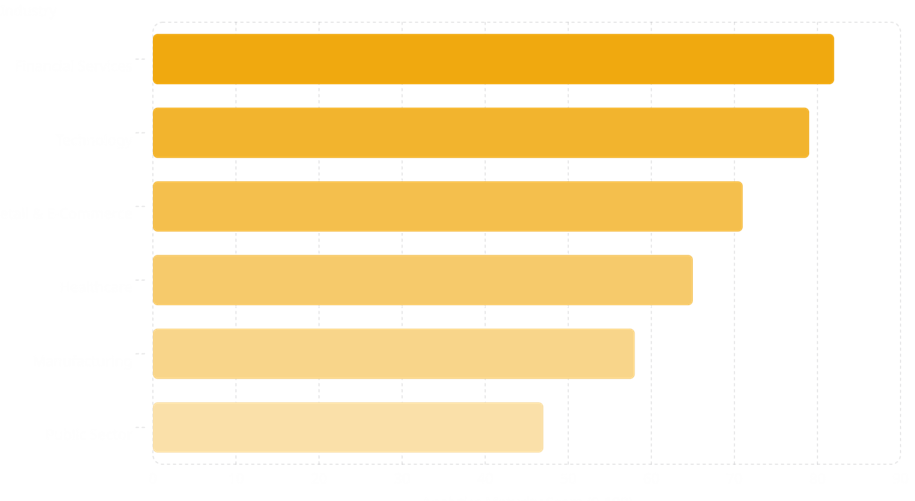
Organizations lagging in maturity most commonly cite data quality issues, lack of skilled talent, and insufficient governance frameworks as primary barriers to advancement.
Chapter 2: Data Strategy
Building a Robust Enterprise Data Strategy
A data strategy is not a technology plan — it is an organizational commitment to treating data as a strategic asset. It aligns people, processes, and platforms around a common vision for how data will be collected, managed, analyzed, and protected.
Without a coherent strategy, organizations accumulate technical debt, duplicate systems, and siloed datasets that undermine the very insights they are trying to generate. A well-architected strategy answers three fundamental questions: What data do we have? What data do we need? And how do we ensure it is trustworthy?